
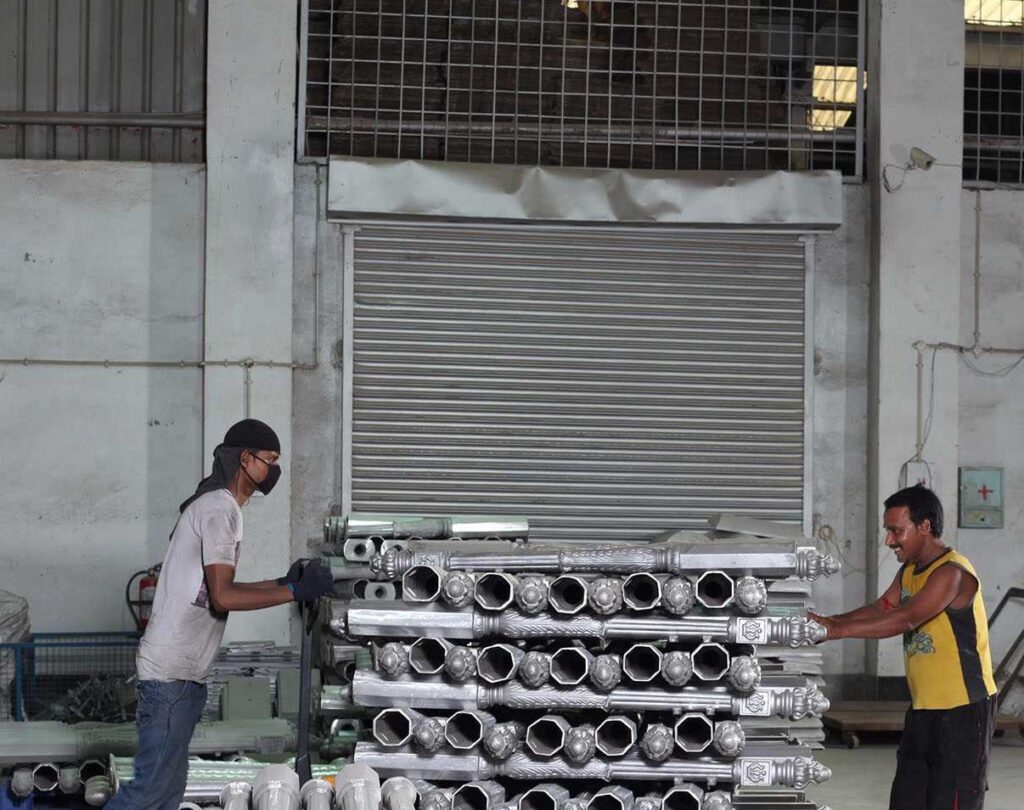
As far as technology is concerned, aluminum casting solutions lie at the fatal points of technology for putting together light, strong, and complex parts in industries such as automotive, aerospace, and consumer electronics. In and into 2025, manufacturers wishing to set costs, efficiencies, and issues of quality should know well the distinction between high-pressure and low-pressure casting of aluminum. Each technique has been useful in its own way, and their usages are ever-growing, which would very much be dictated by applications in which aluminum casting would be done in the future.
High-Pressure Aluminum Casting: Speed and Precision
Previously referred to as die casting, high-pressure aluminum casting involves injecting molten aluminum into a steel mold at high pressure that generally ranges between 10 and 150 MPa. This is a well-known method to manufacture intricate components of high-level precision and surface finish. In 2025, high-pressure casting continues to rule industries that seek fast production cycles and tight tolerances, such as automotive parts and electronic housings.
Key Benefits of High-Pressure Casting:
- Highly Productive: Fast cycle times allow for massive production, and hence, it is suitable for very huge production.
- Dimensional Accuracy: The process maintains very close tolerances and precise geometries, thereby cutting down on secondary machining.
- Complex Design Capability: High-pressure casting can produce intricate features and thin walls, which make the scope for design even wider.
Aluminum casting by pressure has its limitations—the higher tooling costs and inability to cast components that are large or very thick being top on the list. These limitations are forcing producers to seek alternative means of aluminum casting wherever possible.
Low-Pressure Aluminum Casting: Adaptability and Quality
In low-pressure aluminum casting, molten aluminum is let into the mold under low pressures (typically below 1 MPa) if a sealed crucible is being used in a vacuum or inert gas environment. It is most often employed in making large, high-integrity components with complex geometries, such as engine blocks, cylinder heads, and aerospace components.
Advantages of Low-Pressure Casting:
- Better Material Integrity: Less turbulence upon pouring means less porosity and fewer defects, thus producing better casting.
- Design Flexibility: Suitable for large and complex geometries with uniform wall thickness.
- Cost-Effective for Low to Medium Volumes: Lower tooling costs make one consider it for special applications.
Growing since 2025, the adoption of low-pressure aluminum casting solutions will be wider in industries where quality and structural integrity are of utmost concern. Ability to produce castings free from defects yet possessing excellent mechanical properties makes the method a favored choice for critical aerospace and automotive applications.
Trending Factors in 2025
1. Automation and Industry 4.0 Integration: Both high- and low-pressure casting processes are increasingly integrated with automation, IoT, and real-time monitoring, boosting efficiency and reducing defects.
2. Sustainability and Cost Reduction: Manufacturers are emphasizing energy-efficient casting solutions that minimize waste, with both methods evolving to meet eco-friendly standards.
3. Material Innovation: The development of advanced aluminum alloys tailored for specific casting methods enhances performance and expands application scope.
4. Customization and Rapid Prototyping: The trend toward customized parts and rapid prototyping favors low-pressure casting’s flexibility and high-quality output.
Key Points Summary
- High-pressure aluminum casting offers rapid production and high precision, making it suitable for high-volume applications requiring detailed components.
- Low-pressure aluminum casting provides superior material integrity and design flexibility, ideal for large, complex, and critical parts.
- Both methods are evolving through automation and material innovations, shaping the future of aluminum casting solutions in 2025.
In the dynamic landscape of 2025, selecting the right aluminum casting solution depends on specific project requirements, volume, and quality standards. Both high-pressure and low-pressure methods continue to innovate, driven by technological advancements and industry demands, ensuring aluminum casting solutions remain at the forefront of manufacturing excellence.